Flourish Summit April 9, 2026
Thank you for attending the Flourish Summit on Unicorn Day.
Please take a few moments to share your feedback HERE as it helps me hone my skills and stay relevant.
4 Roots of Resilience

Managing stress responses and maintaining physiological balance.
“Caring for myself is not self-indulgence, it is self-preservation, and that is an act of political warfare.”

Root of Self-Regulation
“A healthy body is a platform for flourishing a healthy mind.” ~Pawan Mishra
Basic Needs: These are basic and boring AND are what makes the biggest impacts on our physical, mental, emotional and relational health.
Sleep Hygiene: Get 7-9 hours of sleep per night.
Movement Routines: Find fun ways to move your body daily.
Water & Food Consumption: Drink enough water & eat healthy foods.
Breathwork & Meditation: Practice deep breathing regularly.
Boundaries: Setting and holding healthy boundaries helps us regulate ourselves and find greater life balance.
Reframing: Shifting a negative or limiting thought to a more empowered thought. This study shows that self-regulation is directly tied to resilience when coupled with reframing: The relationship between self-regulation, cognitive flexibility, and resilience among students: a structural equation modeling.
The Science of Self-Regulation
Regulated people think more clearly, respond more compassionately, and recover faster from stress.
Movement increases endorphins, serotonin, dopamine, and norepinephrine — the neurochemicals responsible for mood, motivation, and emotional steadiness.
Studies show that emotional regulation skills significantly predict higher life satisfaction — even more than physical activity alone.
Regular use of cognitive reappraisal — reframing thoughts — fully mediates the relationship between physical activity and life satisfaction. How we interpret our experiences shapes our emotional health.
Successful emotional regulation is linked to better physical health outcomes, including reduced inflammation and improved immune function.
Women’s immune systems are more reactive to stress, which may increase vulnerability. Women make up about 80% of all autoimmune disease cases and 80% of those are due to unresolved and unchecked stress and anger.

Building supportive, reciprocal, and emotionally safe connections.
“Community is not proximity. It is not something we can take for granted. It is something we must cultivate, protect, and practice.”

Root of Healthy Relationships
“We need joy as we need air. We need love as we need water. We need each other as we need the earth we share.” ~Maya Angelou
Define It & Become It: Define what a healthy relationship is and practice being what you want. This allows us to attract and identify healthy relationships.
Creating & Respecting Boundaries: Learn to set healthy boundaries.
Social Support Circles: Know who is in your inner most circles. The people should get the majority of your attention and energy.
Quality Time: Spend quality time with healthy and supportive people. Create quality time with as many people as possible by being fully present, whether they are in your innermost or outermost circles.
Longest Harvard study shows that the quality of our overall health and happiness is directly connected to the health of our relationships.
The Science of Healthy Relationships
The Harvard Study of Adult Development — the longest-running study on human well‑being — found that close, supportive relationships are the #1 predictor of happiness, health, and longevity, more than wealth, IQ, or even genetics.
Supportive relationships help regulate the nervous system by lowering cortisol and increasing oxytocin.
People with strong healthy social ties have a 50% increased chance of survival over time compared to those who are isolated — a finding consistent across multiple studies.
Positive social support is linked to lower rates of anxiety, depression, and emotional distress.
People with strong relational support recover from stress, trauma, and adversity more quickly.
The U.S. Surgeon General’s advisory on loneliness reports that chronic social disconnection significantly increases the risk of heart disease, stroke, dementia, and premature death.
Connecting to something larger: values, legacy, spirituality, or service.
“He who has a ‘why’ to live for can bear almost any how.”

Root of Greater Purpose
“Knowing your deepest intentions can be your guiding force in the creation of a better life.” ~Oprah Winfrey
Your Values/ Priorities: Identify your values (how you live) and your priorities (what is important to you). Live accordingly.
Life Mission/ Your “WHY”: Decide what your life mission, your purpose and your why are. This is not a role or title, it is a declaration of who you will be no matter what role or title you are in.
Honor The Cycle: Life is constantly changing and evolving. Let go of any expectations of the past and honor where you are. Make decisions accordingly.
Know Your Dreams/Aspirations: Knowing what we strive for and why can help us root into a purpose that helps drive us.
Create a Personal Mission: My personal mission is to bring love, joy, education and empowerment into every space of my life (as much as possible). I can do that with my work, at the supermarket, at the gym, and with my family. It may look different from space to space and person to person AND it is achievable.
The American Psychiatric Association reports that “greater purpose in life is significantly associated with lower levels of depression and anxiety.” Purpose in Life Can Lead to Less Stress, Better Mental Health
The Science of Purpose
People with a strong sense of purpose have a lower risk of death from all causes, including heart disease. Multiple large studies show that purpose is as protective as not smoking or exercising regularly. Purpose literally extends life.
Purpose helps regulate the stress response system, lowering cortisol and increasing emotional resilience.
Research shows that people with a strong sense of purpose have better immune function, lower inflammation and healthier cardiovascular markers.
Studies consistently show that people with a clear sense of purpose experience lower rates of depression and anxiety. Purpose gives meaning to challenges and increases motivation to engage in healthy coping.
Purpose increases resilience by helping people bounce back from adversity, stay motivated during difficulty and maintain hope during uncertainty. it is a psychological anchor.
Older adults with a strong sense of purpose show slower cognitive decline, better memory, and reduced risk of dementia.
Engaging in activities that spark delight, creativity, and spontaneity.
“Play is the brain’s favorite way of learning. ”

Root of Joy & Play
“The body heals with play. The mind heals with laughter. The spirit heals with joy.” ~Unknown
Happiness is usually linked to external circumstances and joy is linked to an internal well-being. For example: Happiness is getting your favorite drink for free. Tripping and spilling that drink may diminish your happiness, yet your internal joy remains because you can recognize how much good there is in life and a spilled drink will not be an excuse for a crappy day.
Look For & Create Small Moments of Joy: They are available everywhere- in nature, animals, other humans, art, literature, music, etc.
Expressive Arts: Engage in any artistic or creative activity that lets you play and helps heal your inner child.
Flow State Activities: Engage in activities that allow you to lose track of time. This is not an invitation to deny or ignore your responsibilities but a chance to take a break and participate in things you really enjoy, when and if you can.
Schedule Fun Activities/ Rituals/ Breaks: Be intentional about playing and creating spaces of and for joy.
Science of Joy: How Your Brain Creates Happiness and Well-Being "Happiness isn’t just an emotion—it’s a complex biological symphony that reshapes our minds, bodies, and lives in ways we’re only beginning to understand."
The Science of Joy
Happiness is usually connected to external circumstances. Joy is described as an internal state of being, sometimes arising spontaneously and independent of conditions.
The 2024 World Happiness Report found that individuals who processed difficult emotions and cultivated joy reported 40% higher life satisfaction than those who avoided discomfort and avoided joy.
After basic needs are met, how people spend their time—especially in engaging, meaningful activities—has a stronger impact on joy than income.
Joyful play reduces physiological stress markers, which in turn supports immune function and cardiovascular health.
Joy activates the brain’s reward circuitry, including the ventral striatum and prefrontal cortex, and is associated with dopamine release, which enhances motivation, learning, and resilience.
Joyful individuals tend to live longer, with lower rates of cardiovascular disease and better immune function.
The Science of Play
Playfulness is linked to enhancing problem-solving and adaptability in work and life contexts.
Regular engagement in playful mental, physical, and social activities sharpens cognitive flexibility and supports long-term brain health.
A 2024 integrative review in The Journal of Positive Psychology found that play and playfulness act as mediators in adult psychological interventions, promoting resilience, stress coping, and emotional regulation.
Engaging in playful activities triggers endorphin release, lowers cortisol, and fosters relaxation.
Adults who play regularly report higher life satisfaction and better coping mechanisms, such as reframing and acceptance.
Additional Resources
Book Recommendations:
Why We Sleep by Matthew Walker, PhD
Breathe: You Are Alive by Thich Nhat Hanh
Set Boundaries, Find Peace by Nedra Glover Tawwab
The Life Changing Magic of Not Giving A F*uck by Sarah Knight
Start with WHY by Simon Sinek
How We Show Up by Mia Birdsong
The Power of Fun by Catherine Price
Mindset: The New Psychology of Success by Carol S. Dweck
Super Sparkly Everything by Maria Milagros Vazquez (see below)
The Love Journey: It Starts with You by Maria Milagros Vazquez (see below)


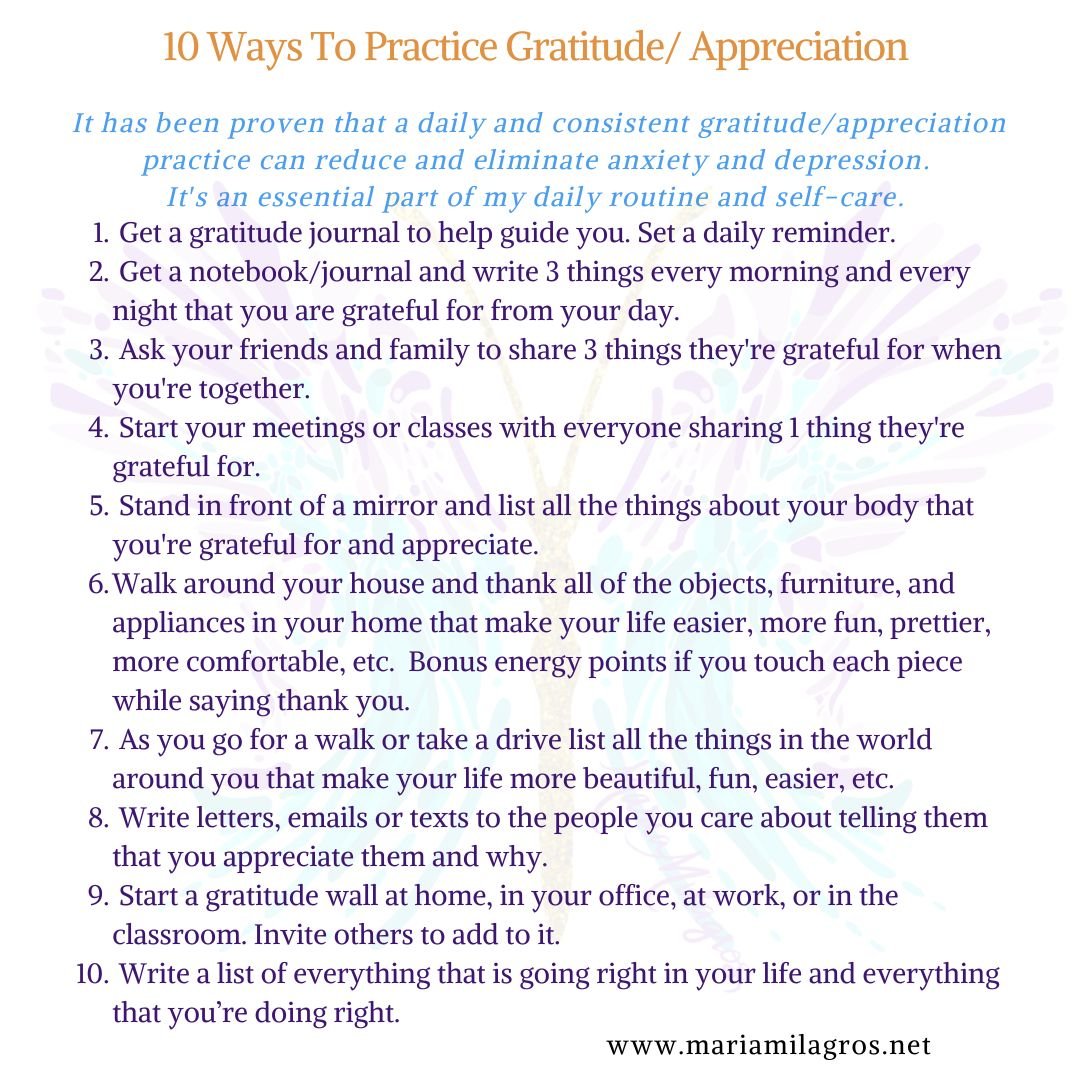
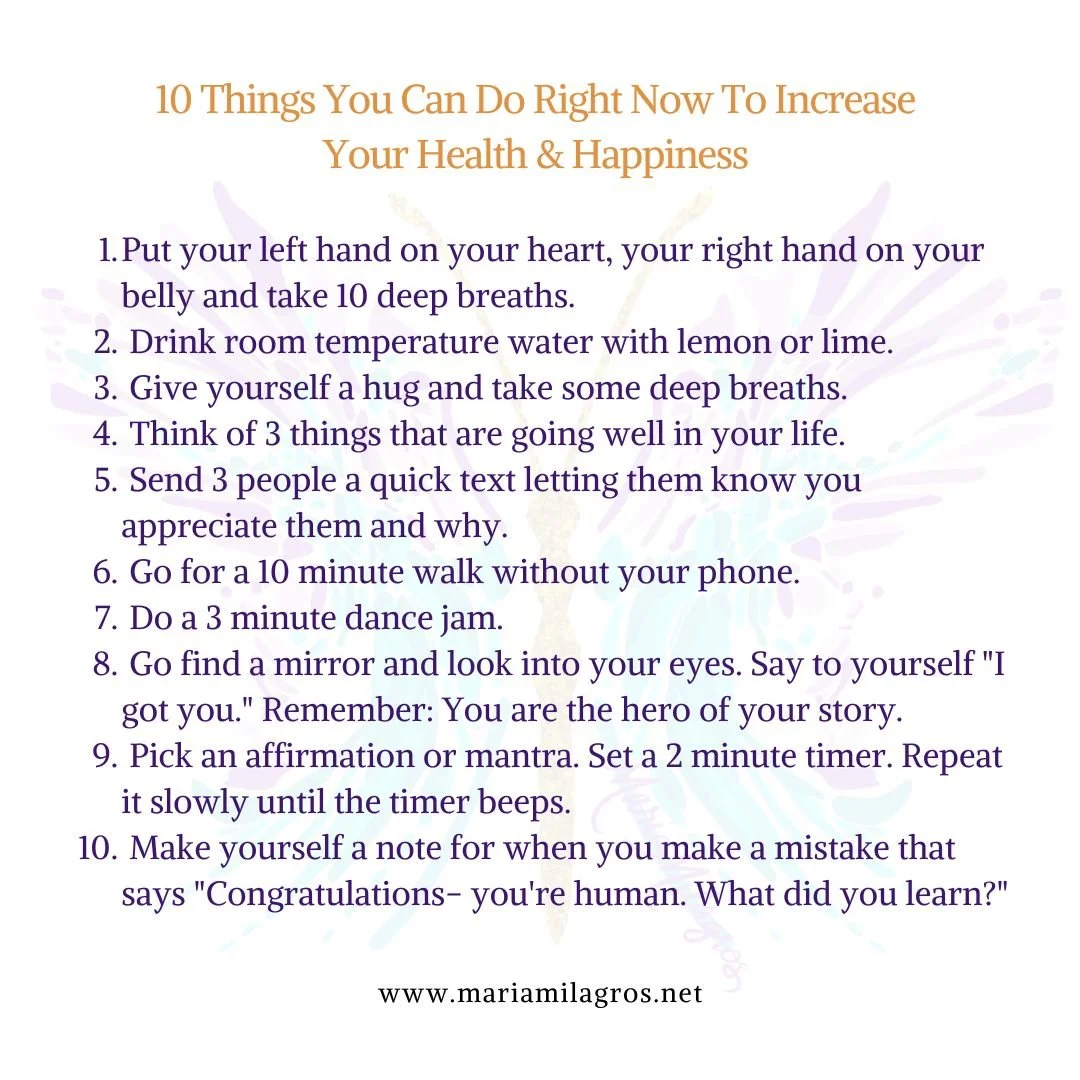
AFFIRMATIONS
I take responsibility for the life I am creating.
I am learning to trust myself to accept and appreciate my worth.
I will be the catalyst for the healthy changes I want in my relationships.
I will learn to honor my amazing body and regulate my mind.
I accept that change is inevitable and will use it to grow and expand.
I will see my mistakes and failures as opportunities to grow.
I live in accordance with my values and priorities.
I anchor into my purpose and mission and live accordingly to the best of my ability.
I will do take responsibility for my day-to-day interactions.
I honor my growth and celebrate my strengths, big or small.
I give myself permission to lighten up and to play.
I will practice gratitude for the people, places, things and experiences that bring me greater ease, joy, growth, health and love.
My joy is sacred.
I practice being present and being mindful.
I am enough—right here, right now, as I am.
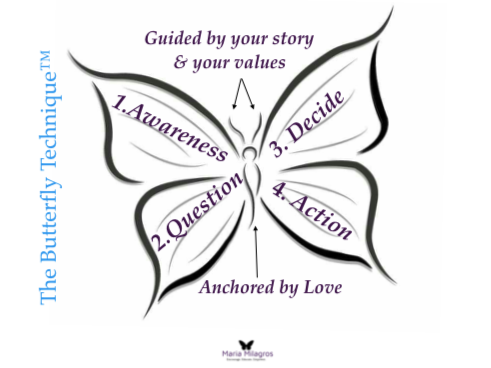
Four Things are Needed for Change
Practice awareness. Pay attention and be aware of what is happening. Do not minimize it or maximize it. See it for what it is.
Ask questions. Ask yourself and others about what you do want. Knowing what we don’t want can help us get very clear about what we do want. Sometimes the only thing that separates ‘what is’ from ‘what is wanted’ is the right question.
Make a decision. Just one decision that feels more like peace is all you need to create a life you love. Be sure that the decision aligns with your values and priorities.
Take action. Not taking action causes greater anxiety, fear and stress. Take action. If you fail, be aware of that, question it and make a new decision. It is a delicious way to learn. If you take action and it’s a win, celebrate.
Rinse and repeat.
TEDx Talks
The Life Changing Practice of Radical Acceptance. A comedy about stress, acceptance, and pivoting.
“What’s Good About This?” A powerful story of gratitude and growth mindset, from a child.
Speaking & Coaching Services

Click HERE to learn more about my speaking services. (schools, colleges, universities, businesses, conferences, events, retreats) Photo from MOC All Staff Day 2024
Click HERE to learn more about my coaching services. (women age 25+, one-on-one or small group, company small groups).
Guided Journal & Book

A guided journal for self-love.
Loving ourselves means freedom from the need of external approval.
It means understanding that we are ALWAYS evolving and changing, and we give ourselves room and permission to do so.
It means breaking old cycles that no longer serve us, creating boundaries that support our overall well-being, and cultivating healthy practices that build both.
It means not needing to compare or compete because we’re aware and confident enough to know that we are the only one of us and that is ENOUGH.
It means being able to give from an overflow of love and joy. That means healthier interactions and relationships. Getting back to a place where we love ourselves can feel challenging because we have to shift the momentum and transform our mindsets.
We can do that through intentional and consistent practices. I believe in starting small. Small steps are the most realistic and sustainable. On my own journey I began to realize the power in the minutia of our words. The words that we choose can support or sabotage the new and empowering stories we want to create.
Words. Small. One at a time. One a day.
From that personal practice and transformative experience, I give you:
The Love Journey.
My book, Super Sparkly Everything, was written for anyone who is where I was… feeling down and stuck and sick and tired of being sick and tired. I had to finally connect with something greater than myself and take personal responsibility for every area of my life. And it was hard! At that time, I only knew that it was hard work.
But the more that I did the work, the more that I figured out what worked for me and what didn't, the more that I gave myself permission to enjoy the process and to feel good about all of it, the better I started to feel. I started to feel more alive and centered.
So I wrote this book to either jump start, help or inspire you to give yourself permission to be happy.
To take responsibility for your happiness and to let it flow so that you can live a life full of joy, peace, health and love.
